Jo Petroni on Estates and Land Stewardship
How historic estates model stewardship beyond property lines

Open space.
History.
Family estates.
Land stewardship.
Sounds romantic, doesn’t it?
I thought so, too, so I reached out to Jo Petroni to learn more. What I hear Jo ask through her writing is this:
What if estates aren’t simply artifacts of past centuries?
What if they can inform how we approach land stewardship for an entire region?
Jo Petroni is an architect and strategic advisor. Her work with estates caught my attention because it immediately reminded me of my previous endeavor in botany and botanical art education, as well as the golden age of botanical art.
I asked Jo if she would be open to talking about her work with estates and how she works with landowners. She said yes, and here is our conversation.
Jo and I didn’t discuss botanical art history when we met. We might still be recording if we did. Instead, we stayed on topic and discussed her career as an architect and how her path led to her current work.
In 2026, the surprise isn’t that historic estates still exist; it’s that these grand homes have lessons to teach us, if we listen.
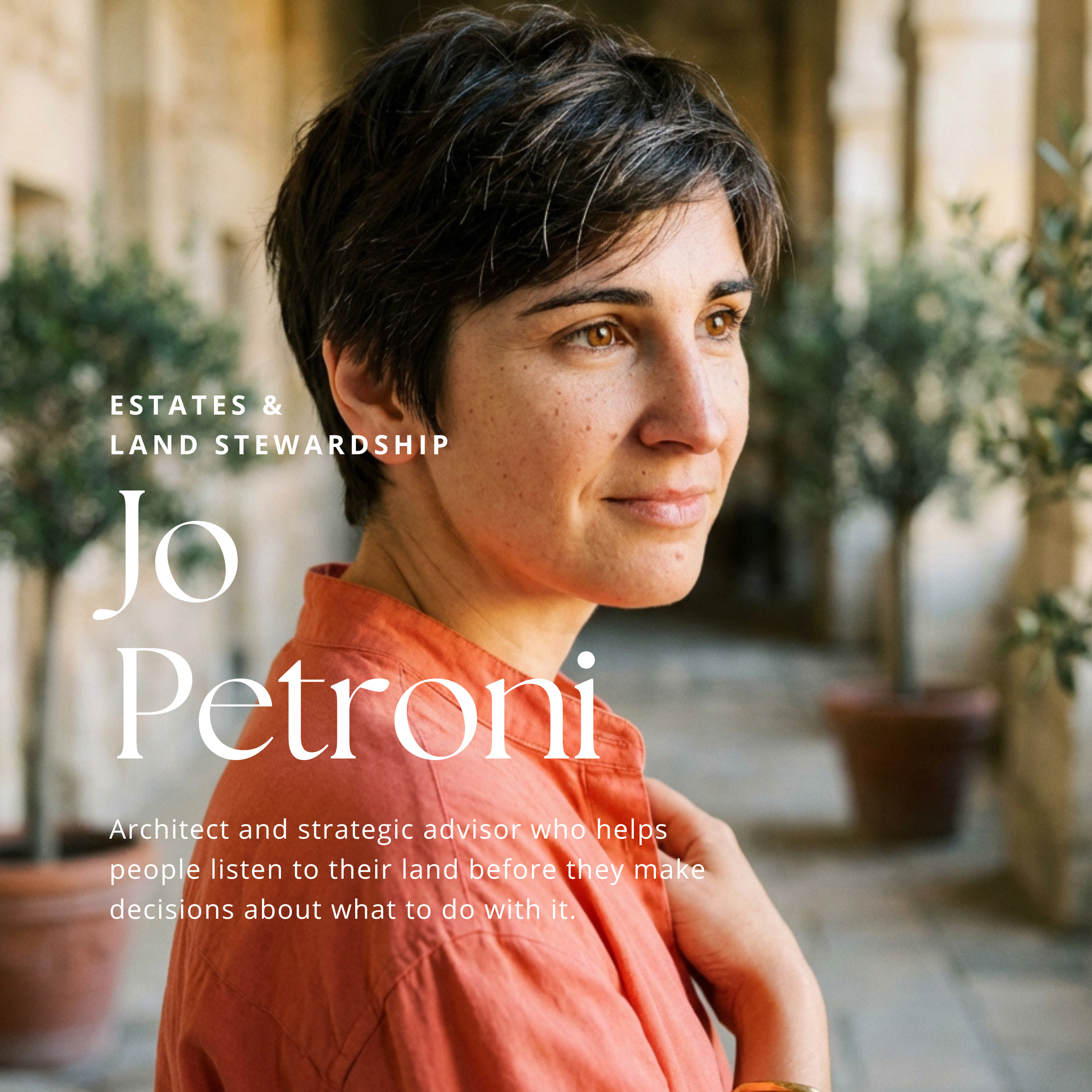
During our conversation, we addressed Jo’s journey as an architect and how she developed her “Listen to Your Land” methodology.
We discuss estate work and technology, team building, and what environmental education looks like in her field. We also spent time talking about the Property Intelligence Report she creates for landowners. What does such a report look like? You can view an anonymized report on her website.
Listen to our entire conversation and learn more about Jo below. Be sure to explore the links she shares. Have fun!
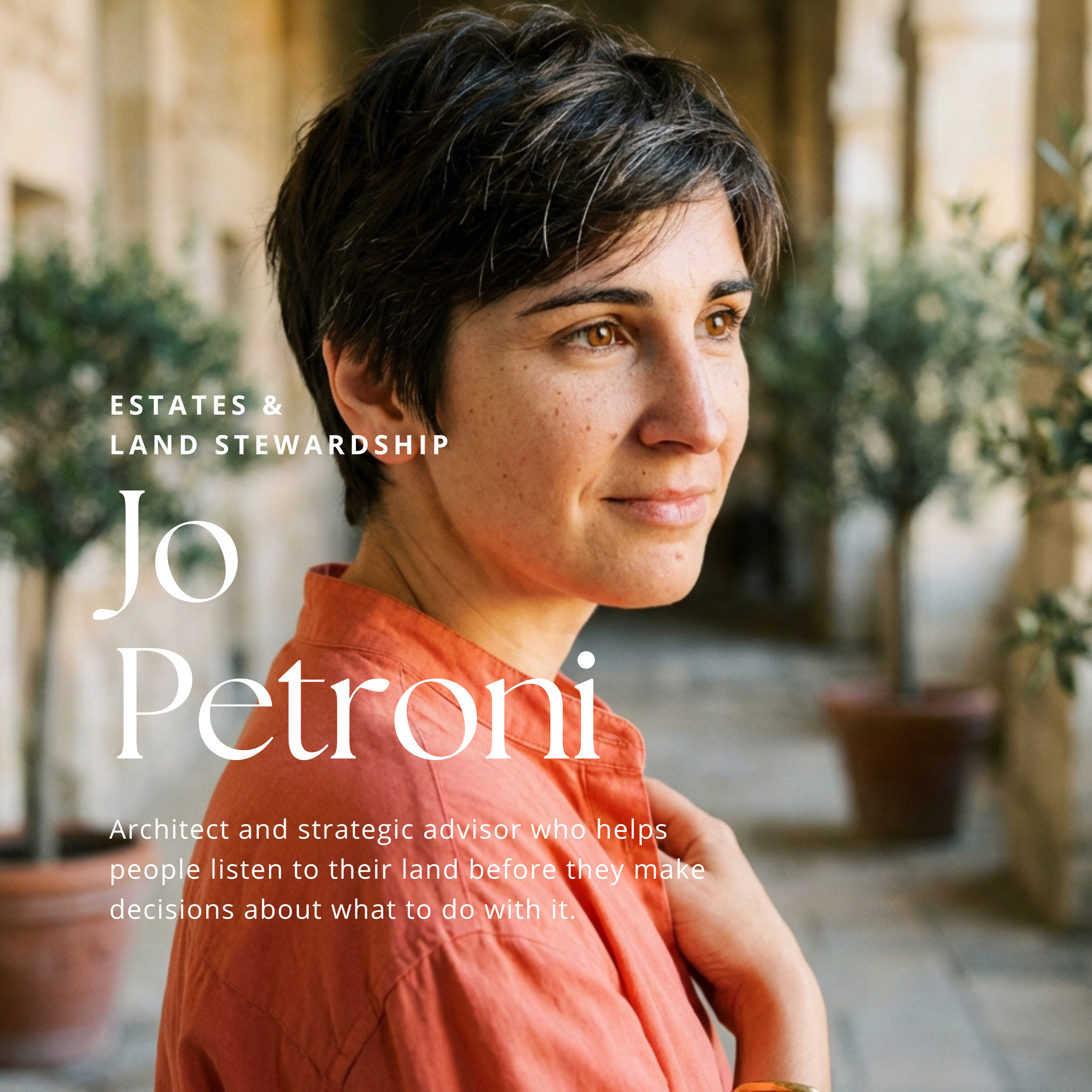
About Jo Petroni
Jo Petroni is an architect and the creator of Listen to Your Land - a way of reading places before deciding what to do with them. Trained as a second-generation architect, she shifted her practice toward the work that has to happen first: helping people see the layers that make a place what it is. Her approach moves between contemplative observation and technical analysis, using four elements as interpretive lenses - Earth (soil, geology, slope), Water (flows, cycles, moisture), Air (wind, microclimate), and Fire (sun, heat, tension) - half poetic shorthand, half practical frameworks for noticing the histories held in soil, the patterns of water across decades, the way previous stewards' decisions still shape what's possible now.
Jo offers the Listen to your Land course on Substack and works with families, developers, and stewards across Europe and North America. Jo is currently based in Provence. You can find her work at jopetroni.com and listentoyour.land. Her latest experiment is hosted at slow.land.
The Place Journaling practice for the summer season is coming soon here.
Updated June 6, 2026, to include a link to a sample Property Intelligence Report.

