Build a sustainable practice
Reaching for more can feel like progress, but it comes with a cost.
We reach for more, more, more.
More attention.
More followers.
More likes.
More hustle.
Is this the kind of “more” you truly want?
Reaching for more may seem like progress. However, it comes with a cost. We begin to lose sight of the path because we’re too busy propping up spinning plates.
You know what it feels like.
So does Jenni Gritters. When she hit her breaking point, she stopped.
She noticed how misaligned her life was and how much she abandoned what mattered to her. So she turned her attention to a topic she felt inside her, but hadn’t yet articulated. This topic was sustainable solopreneurship.
Jenni Gritters is a journalist, business coach, and business owner. She is also the author of Sustainable Solopreneurship, a book about building a manageable practice that puts the key person (you) first. The guidance she offers is grounded in her experience as a business owner and coach. This is a book worth considering if you are looking to grow a practice built on human connection instead of the usual MBA-style tactics we feel so compelled to try.
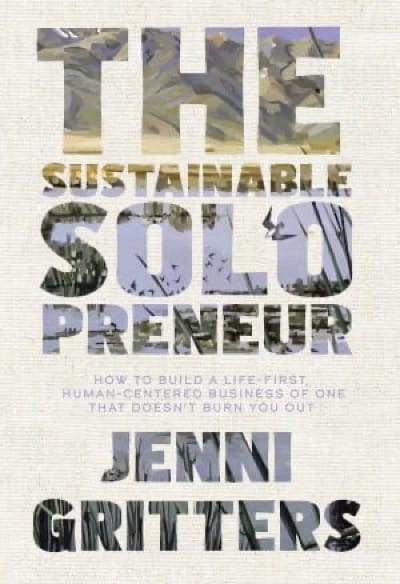
I share this book with environmentally minded audiences because Gritter’s approach to sustainable business practices is inspired by nature and the regenerative aspects of ecosystems. Her mindful approach resonates.
“The goal of sustainable solopreneurship is to build a business that lasts over many seasons of life and allows you to center your own well-being through sickness, health, caretaking, evolving passions and purposes, moves, marriages and aging.” ~ Jenni Gritters
In Sustainable Solopreneurship, Gritters distills years of tension she experienced between family life and building her Business of One. She presents five sustainable business principles and guides readers through examples and exercises that help them:
- Become clear on their purpose.
- Make decisions.
- Create a sustainable business model that works for them.
- Reframe their relationship with money.
- Assess their own capacity (honestly).
Gritter reminds us that the 40-hour workweek is a human construct, and that it is perfectly okay to ignore it. No permission necessary. Personally, I tend to forget this fact, and it was good to be reminded.
I will leave you with one of Gritter’s comments that resonated deeply with me. She writes:
"The goal is to learn to manage the flow of resources in your business in a way that benefits humanity and benefits you in a way that feels like a gift.”
Is this something you’d like to achieve?
What might your human-centered, life-first business look like?
For Your Library:
Gritters, Jenni. (2025). Sustainable Solopreneurship: How to build a life-first, human-centered business of one that doesn’t burn you out. Jenni Gritters, Bend, Oregon.
Available at Bookshop.org and wherever you buy books. (affiliate link)